
A water heater has two slow enemies: sediment and corrosion. Sediment comes from minerals that separate out as water is heated and sink to the bottom of the tank, where they cut efficiency, cause popping and rumbling on gas models, and overheat the steel or bury the lower element on electric ones. Corrosion is held back by the anode rod, a sacrificial rod of magnesium or aluminum that gives itself up so the tank lining is spared. Neither one is visible from the outside, and by the time a homeowner notices, the damage is usually done. That is the reason maintenance matters for Milwaukee, WI homes: it interrupts both problems while they are still cheap to fix.
Our maintenance visit is built to interrupt both problems. We drain and flush the tank until the water runs clear, pull and inspect the anode rod and recommend a replacement when it is mostly consumed, and test the temperature and pressure relief valve to confirm it opens and reseats. On gas units we inspect the burner, pilot or igniter, thermocouple or flame sensor, flue baffle, and venting for proper draft. On electric units we test the elements and thermostats with a meter and look at the wiring for heat damage. We check the expansion tank's air charge against your water pressure, verify the temperature setting is near 120 degrees to limit scalding, and look for early leaks at fittings and valves.
Tankless water heaters have their own maintenance needs. Scale builds up inside the heat exchanger, especially in hard water, and eventually triggers error codes, reduced flow, or temperature swings. We descale the heat exchanger with a pump and descaling solution through the service valves, clean the inlet filter, check the venting and condensate line on condensing models, and review the unit's error history. At the end of any visit, you get a plain-language report of what we found. Call (414) 209-3952 to schedule water heater maintenance in Milwaukee before a small issue turns into a leak.
Most of our service calls are for Water Heater Repair in Milwaukee and Water Heater Replacement in Milwaukee. Either is a good place to start.
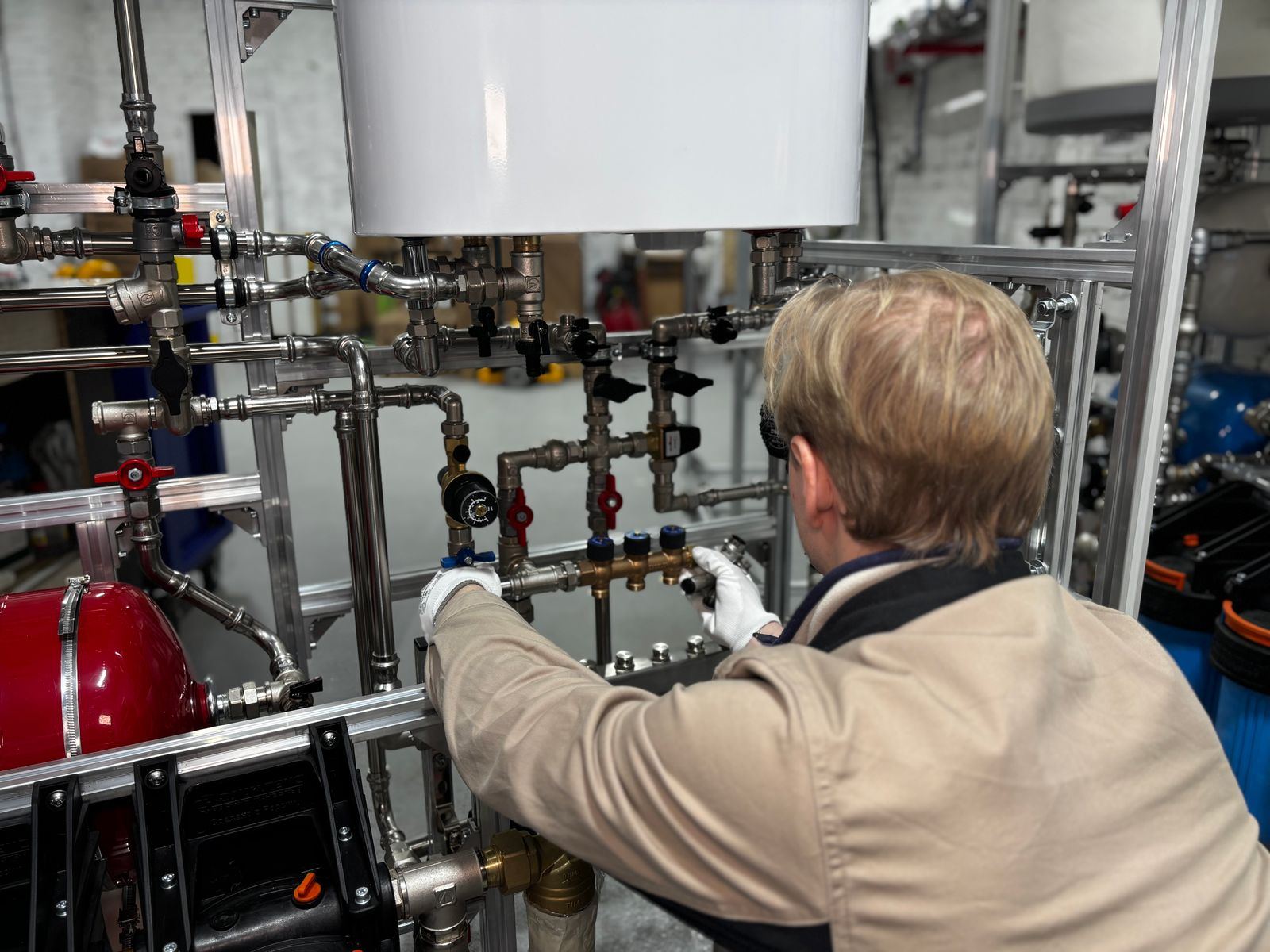
When to Call for Water Heater Maintenance
A heater that is starting to struggle rarely hides it for long, and the clues are easy to spot once you know them. Watch for these telltale signs that professional help is needed:
- Water in the drain pan or on the floor near the heater
- Rusty or discolored hot water at the tap
- A tank that pops and knocks during a heating cycle
- Less hot water available than when the tank was new
- More than a year since anyone flushed the tank
- Energy bills creeping up with no change in hot water use
- A tankless unit showing error codes or fluctuating temperatures
- A smell like rotten eggs that shows up only on the hot side
Act Before It Gets Worse
Left alone, even minor symptoms like rumbling or temperatures that swing from hot to warm tend to mean the heater is working its way toward a breakdown. If you notice any of these signs, contact Milwaukee Water Heater at (414) 209-3952 for a prompt inspection.
No Hot Water? We Can Help.
We'll diagnose the problem and give you a straight answer on the fix.
Get Help: (414) 209-3952Water Heater Maintenance FAQ
Why Hire a Professional for Water Heater Maintenance?
The homeowner's side of maintenance is short: keep the area clear, watch for drips, and pay attention to new sounds. The rest is harder than online videos make it seem. Flushing involves scalding water and an old plastic drain valve that may crack or refuse to seal. Anode rods are often seized in place and need significant force, sometimes with a flexible rod for low-clearance spaces. An older T&P valve may not reseat once tested, which leaves you with a drip and a replacement to arrange. And on gas heaters, the burner and vent affect how combustion gases leave the house, which is not a place to guess.
Our trucks are stocked for the usual surprises: a drain valve that will not reseal, an anode rod that has turned to wire, a relief valve that drips after testing. We carry replacements, along with meters for element and thermostat testing and a descaling kit for tankless units. More than parts, we bring experience. Small signs, like rust at a connection, a weak flame, or a waterlogged expansion tank, tell us where a heater is headed, and catching them early is the entire point of the visit. That is how a routine visit adds years to a heater's life.
What to Expect From Our Team
We follow the same careful process on every water heater, whether it's a quick thermostat swap or a full tankless conversion. Here's exactly how a typical visit unfolds:
Inspection and Safety Test
The visit starts with safety: relief valve testing, a leak check, a look at the burner, pilot, and flue on gas models, and element testing on electric ones.
Sediment Flush
Sediment gets cleared through the drain valve until the water comes out clean, and we check that the valve closes without dripping.
Anode and Expansion Tank Check
Anode condition tells us how well the tank is protected, and the expansion tank check confirms thermal expansion is being absorbed.
Plain-Language Summary
You get a straightforward summary: what is healthy, what is wearing, and what to plan for next.
Not Sure What You Need?
We give honest advice and upfront pricing on every job, big or small.
Get Help: (414) 209-3952How to Prevent Water Heater Problems
Routine maintenance is almost always cheaper and easier than an early replacement. Put these technician-approved steps to work at home:
- Keep at least a couple of feet clear around the heater for air and service access
- Descale tankless units once a year, or more often in hard water
- Treat hard water to cut down on sediment and scale
- Schedule a flush every year, or every six months if you have hard water
- Keep the thermostat near 120 degrees to limit scalding and slow sediment buildup
- Replace a heavily consumed anode rod to extend the tank's life
- Glance at the pan and connections regularly so small leaks are caught early
Should You DIY or Call a Pro?
The line between a safe DIY check and a risky repair is usually the moment you need to open a gas fitting, a vent connection, or an electrical cover. Consider the following comparison:
| Consideration | Doing It Yourself | Hiring a Pro |
|---|---|---|
| Flushing | Sediment clogs the valve midway | Valve checked and replaced if needed |
| Corrosion Protection | Seized fitting and limited clearance | Pulled, inspected, and replaced when consumed |
| T&P Testing | No replacement on hand | Valve operation verified |
| Burner and Venting | Flame and draft hard to judge | Burner, pilot, and draft checked |
| Tankless Descaling | Error codes ignored | Error history reviewed |
| Expansion Tank | Waterlogged tank missed | Water pressure checked |
Let's Get Your Hot Water Back
Cold showers and damp floors don't get better on their own. Milwaukee Water Heater can have a technician headed your way soon.
Tap to Call (414) 209-3952Communities We Cover
We serve Milwaukee and its neighboring towns for water heater maintenance, from quick same-day repairs to planned installs.